Why Iranian Saffron Is the Best in the World: Scientific and Market Analysis
Introduction
Saffron is widely known as the most valuable spice in the world. Often called “red gold,” this unique spice has been treasured for thousands of years for its flavor, color, aroma, and medicinal properties. Among all saffron-producing regions across the globe, Iranian saffron consistently stands out as the highest quality and most sought-after product in international markets. Iran is responsible for producing the majority of the world’s saffron supply, and its reputation for superior quality is supported by both scientific research and global market data.
The unique climate, soil conditions, traditional farming knowledge, and advanced harvesting techniques used in Iran contribute to saffron that surpasses competitors in both chemical composition and sensory characteristics. From Spain and Afghanistan to India and Greece, many countries produce saffron, yet Iranian saffron continues to dominate the industry in terms of quality, volume, and economic influence.
This article provides a detailed scientific and market analysis explaining why Iranian saffron is considered the best in the world. It explores the botanical qualities, chemical composition, cultivation conditions, grading standards, international demand, and economic impact that collectively reinforce Iran’s leading position in the saffron industry.
The Origins and History of Iranian Saffron
Iran has a saffron cultivation history that dates back more than 3,000 years. Ancient Persian civilizations cultivated saffron not only as a spice but also as a dye, perfume ingredient, and medicinal herb. Historical records show saffron being used in Persian royal courts, traditional medicine, and cultural ceremonies.
Today, saffron cultivation is deeply embedded in Iranian agricultural traditions, especially in provinces such as Khorasan Razavi and South Khorasan. These regions provide ideal environmental conditions for saffron farming, including dry climates, significant temperature differences between day and night, and mineral-rich soil.
Over centuries, Iranian farmers have perfected the delicate process of growing, harvesting, and processing saffron. The knowledge passed down through generations plays a critical role in maintaining the exceptional quality that Iranian saffron is known for today.
Ideal Climate and Soil Conditions in Iran
One of the primary reasons Iranian saffron is considered the best in the world is the natural environment where it is cultivated. Saffron grows from the Crocus sativus flower, which requires very specific environmental conditions.
Iran’s saffron-growing regions offer the perfect combination of climate and soil characteristics that allow saffron crocus plants to thrive.
Key environmental advantages include:
Dry climate with low humidity
Hot summers and cold winters
Minimal rainfall during flowering season
Well-drained sandy or loamy soil
High altitude cultivation areas
These environmental conditions stress the saffron plant in ways that enhance the concentration of its key chemical compounds. As a result, Iranian saffron typically has higher levels of crocin, picrocrocin, and safranal, which determine color strength, taste, and aroma.
Other countries that attempt to cultivate saffron often lack these precise conditions, resulting in lower potency and weaker sensory qualities.
Scientific Composition of High-Quality Saffron
The quality of saffron is scientifically measured based on three major compounds that define its characteristics.
Crocin
Crocin is responsible for saffron’s vibrant red color and strong coloring power. High crocin levels indicate stronger pigmentation and higher quality.
Picrocrocin
This compound gives saffron its distinctive bitter taste and contributes to its flavor complexity.
Safranal
Safranal is responsible for saffron’s unique aroma and fragrance.
Iranian saffron consistently scores higher in laboratory tests measuring these compounds. International standards such as ISO 3632 classify saffron into different grades based on the concentration of these compounds. Iranian saffron frequently achieves the highest category, known as Grade I saffron.
Scientific studies comparing saffron from various countries often show that Iranian saffron contains stronger pigment strength and higher aromatic intensity. This makes it more efficient for culinary, pharmaceutical, and cosmetic applications.
Harvesting Techniques and Labor Precision
Another critical factor that contributes to the superiority of Iranian saffron is the harvesting process. Saffron harvesting is extremely labor-intensive and requires careful manual work.
Each Crocus sativus flower produces only three red stigmas, which must be separated by hand. It takes approximately 150,000 to 170,000 flowers to produce just one kilogram of dried saffron.
In Iran, saffron harvesting is traditionally done at dawn during the short flowering season in autumn. Harvesting flowers early in the morning helps preserve the delicate compounds responsible for saffron’s aroma and flavor.
After harvesting, the stigmas are carefully separated and dried using controlled techniques that maintain their chemical integrity. This meticulous process ensures that Iranian saffron retains its high potency and long shelf life.
Many competing producers rely on less precise processing methods that can damage the delicate stigmas, reducing quality and value.
Types of Iranian Saffron
Iran produces several categories of saffron that are recognized in global markets. These types differ based on how much of the stigma and style are included during processing.
Sargol saffron
This type contains only the pure red stigmas and is considered one of the highest quality saffron types.
Negin saffron
Negin saffron features long, thick, fully separated red stigmas with minimal yellow parts. It is often regarded as the most premium commercial saffron available.
Pushal saffron
Pushal saffron includes both the red stigma and a small portion of the yellow style. It is slightly less concentrated but still high quality.
Bunch saffron
Also known as Dasteh saffron, this type keeps the stigmas bundled together with part of the style attached.
Among these varieties, Negin and Sargol saffron are the most valuable in international markets due to their purity and strong coloring power.
Global Market Dominance of Iranian Saffron
Iran produces approximately 85 to 90 percent of the world’s saffron supply. This overwhelming production capacity allows Iran to shape global pricing and supply chains.
Major saffron importers include:
Spain
India
United Arab Emirates
China
Italy
France
Germany
Spain is particularly notable because it imports large quantities of Iranian saffron and re-exports it under Spanish branding. Despite this rebranding practice, much of the saffron sold globally originates from Iranian farms.
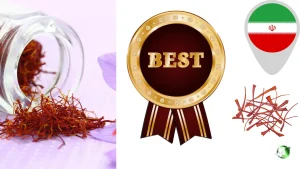
The global saffron market continues to grow due to rising demand in food industries, pharmaceuticals, herbal medicine, and cosmetics.
Iran’s dominance in both production and quality ensures that it remains the central player in this expanding market.
Medicinal and Health Benefits of Iranian Saffron
Scientific research has shown that saffron contains powerful bioactive compounds with numerous health benefits. Iranian saffron, with its higher concentration of active compounds, is particularly valued in the medical field.
Studies suggest saffron may help support:
Mood improvement and depression management
Antioxidant protection
Eye health and vision support
Memory and cognitive function
Cardiovascular health
Anti-inflammatory effects
Some clinical trials indicate saffron extracts may help reduce symptoms of mild to moderate depression. Other research suggests saffron could support retinal health and help prevent age-related macular degeneration.
These health benefits significantly increase the value of high-quality saffron in global pharmaceutical and nutraceutical industries.
Culinary Superiority of Iranian Saffron
Chefs around the world prefer Iranian saffron due to its intense aroma, vibrant color, and balanced flavor profile. Even a small amount can transform dishes with its distinctive golden hue and rich fragrance.
Iranian saffron is widely used in many international cuisines, including:
Persian cuisine
Mediterranean dishes
Spanish paella
Italian risotto
Indian biryani
French gourmet sauces
High crocin content means Iranian saffron releases color quickly and evenly, making it especially desirable for professional chefs and food manufacturers.
Quality Control and International Standards
High-quality saffron must meet strict international grading standards. ISO 3632 is the primary global standard used to evaluate saffron quality.
The grading system measures:
Color strength (crocin level)
Aroma strength (safranal level)
Flavor strength (picrocrocin level)
Moisture content
Purity
Iranian saffron frequently ranks within the highest quality classification under this standard. Many reputable Iranian producers also implement advanced packaging technologies to preserve saffron’s quality during international shipping.
Proper packaging protects saffron from light, moisture, and oxygen, all of which can degrade its chemical properties.
Economic Importance of Saffron in Iran
Saffron plays a significant role in Iran’s agricultural economy. Hundreds of thousands of farmers depend on saffron cultivation for their livelihoods.
Saffron farming is especially valuable because it requires relatively little water compared to many other crops. This makes it particularly suitable for Iran’s arid regions.
In addition to domestic sales, saffron exports generate substantial foreign revenue. As global demand increases, saffron remains one of Iran’s most valuable agricultural exports.
Efforts are also being made to expand saffron-based industries, including saffron-infused foods, beverages, cosmetics, and pharmaceutical products.
Challenges and Competition in the Global Market
Despite its dominance, Iranian saffron faces increasing competition from emerging producers such as Afghanistan, Morocco, and India.
Some challenges include:
International trade restrictions
Rebranding by intermediary countries
Counterfeit saffron products
Quality inconsistencies in some export channels
However, due to its superior quality and long-standing reputation, Iranian saffron continues to maintain strong global demand.
Efforts to strengthen branding, improve packaging, and expand direct export channels are helping Iranian producers maintain their leadership position.
The Future of Iranian Saffron
The future of Iranian saffron remains highly promising. Advances in agricultural technology, quality testing, and international marketing are helping Iranian producers further enhance their competitive advantage.
Researchers are also exploring new applications for saffron in pharmaceuticals, cosmetics, and functional foods. As scientific understanding of saffron’s health benefits grows, demand is expected to increase significantly.
With continued investment in quality control, branding, and sustainable farming practices, Iranian saffron is likely to remain the gold standard in the global saffron industry for decades to come.
Conclusion
Iranian saffron has earned its reputation as the best saffron in the world through a unique combination of natural advantages, centuries of agricultural expertise, and superior chemical composition. Ideal climate conditions, careful harvesting techniques, and strict quality standards contribute to saffron that consistently surpasses competitors in color, aroma, and flavor.
Scientific research confirms that Iranian saffron contains high concentrations of the compounds responsible for its exceptional quality. At the same time, global market data demonstrates Iran’s overwhelming dominance in production and export.
From culinary excellence to medicinal benefits, Iranian saffron continues to set the global benchmark for this precious spice. As demand grows worldwide, Iran’s saffron industry is well positioned to maintain its leadership and continue delivering the finest saffron available.
FAQ
Why is Iranian saffron considered the best in the world?
Iranian saffron is considered the best because it contains higher concentrations of crocin, picrocrocin, and safranal, the compounds responsible for saffron’s color, flavor, and aroma. The climate and soil conditions in Iran also create ideal growing environments for high-quality saffron.
Which region in Iran produces the most saffron?
The majority of Iranian saffron is produced in the Khorasan region, particularly in South Khorasan and Khorasan Razavi provinces.
What is the highest quality Iranian saffron type?
Negin saffron and Sargol saffron are considered the highest quality types because they contain pure red stigmas with strong coloring and aroma properties.
How much saffron is produced from one flower?
Each saffron flower produces only three stigmas. It takes approximately 150,000 to 170,000 flowers to produce one kilogram of dried saffron.
Why is saffron so expensive?
Saffron is expensive because it requires intensive manual labor to harvest. The flowers must be picked by hand and the stigmas carefully separated and dried.
Does Iranian saffron have health benefits?
Yes. Iranian saffron contains powerful antioxidants and bioactive compounds that may help support mood, eye health, cognitive function, and overall wellness.
How can you identify genuine Iranian saffron?
Authentic Iranian saffron typically has deep red stigmas, a strong aroma, and releases rich golden color when infused in warm water. It should not dissolve immediately or lose its shape quickly.
How is saffron stored to maintain quality?
Saffron should be stored in an airtight container away from light, heat, and moisture. Proper storage helps preserve its aroma, flavor, and coloring strength for a longer time.